
Implant Dentures – Denver, CO
Restore Your Bite and Your Beautiful Smile
The loss of an entire arch of teeth can leave a person less willing to smile and engage socially, and the limitations of traditional dentures can become quite frustrating for some. Thankfully, implant dentures allow patients to replace full arches of missing teeth with beautiful and functional restorations that work and feel just like the real thing. Here’s a quick guide to how implant dentures are placed, who they can help, and how Dr. Vernon can help you achieve your ideal smile.

Why Choose Riviera Family Dentistry of Denver for Implant Dentures?
- Skilled and Compassionate Implant Dentist
- Dental Implants Placed In-house
- Flexible Financing Options Available
What Are Implant Dentures?
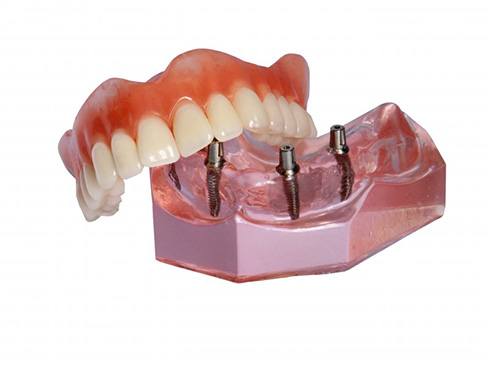
Traditional dentures hold themselves in the mouth through suction, and they often require adhesive products to stay in place. Implant dentures, on the other hand, are anchored to sturdy titanium posts surgically attached to the jawbone. Since titanium has the remarkable ability to fuse with living bone tissue, these posts allow restorations mounted upon them to deliver superior chewing power and last for decades if they receive excellent care. The first step to receiving implant dentures is to schedule a consultation with Dr. Vernon so he can evaluate your oral health and determine the best way to replace your lost teeth. Based on his findings, he may recommend:
Fixed/Permanent Implant Dentures
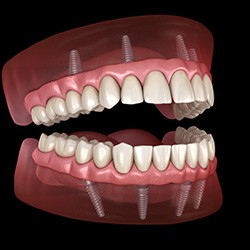
Fixed implant dentures are designed to be removable only by a qualified implant dentist such as Dr. Vernon, so the patient will only need to stick to a normal daily oral hygiene routine that includes brushing, flossing, and antibacterial mouthwash to keep their new teeth in great shape. These devices require the patient to have jawbones strong enough to support four to six precisely positioned dental implants.
Removable Implant Dentures
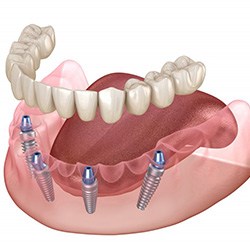
Also called “snap-on dentures,” removable dentures are secured to the implants using clips or ball sockets so the patient can remove them for daily cleaning. These devices normally require two to five dental implants.
The Implant Denture Process
The team at our practice is proud to be trained and equipped to perform the entire dental implant process at our office. This will include the following four steps:
- Consultation: You will visit with Dr. Vernon to discuss your oral health and medical history. Once you are cleared for the treatment, we’ll be happy to schedule you for surgery.
- Surgery: The process of placing dental implants is rendered completely painless by local anesthetics. Once the devices are placed, you’ll need to wait several months for them to fuse to your jawbone before receiving abutments.
- Abutments: You’ll come back to our office for another minor surgical procedure that places abutment pieces on your implants. These pieces will allow the restorations to be securely attached.
- Restorations: After you have healed from the abutment surgery, which will usually take about two weeks, you’ll come back to receive your customized restoration. After any final adjustments, you’ll be ready to show your new smile off to the world.
Am I a Candidate for Implant Dentures?
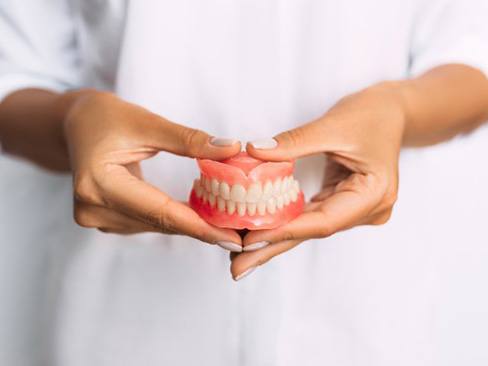
Most adults in good oral health can be excellent candidates for implant dentures. While you may need treatments to address oral infections like gum disease and tooth decay or bone grafts to reinforce your jawbone before receiving implants, we’ll be happy to schedule you for any needed dental procedures at our office or recommend an appropriate specialist if necessary. Medications like steroid and blood thinners and medical conditions like pregnancy, cancer, diabetes, osteoporosis, and hemophilia can complicate the implant process, but they don’t necessarily disqualify you from the treatment. Please be thorough when discussing your medical history during your consultation.
Benefits of Combining Dentures & Dental Implants

While implant dentures are more costly than traditional restorations, they offer a range of important benefits like:
- Lifelike artificial teeth that are indistinguishable from the real thing.
- Restorations that can last for decades if they receive excellent care.
- Preventing facial atrophy by stimulating the jawbone.
- Easy hygiene requirements.
- Saving the patient thousands of dollars that would be spent on costly replacement restorations.